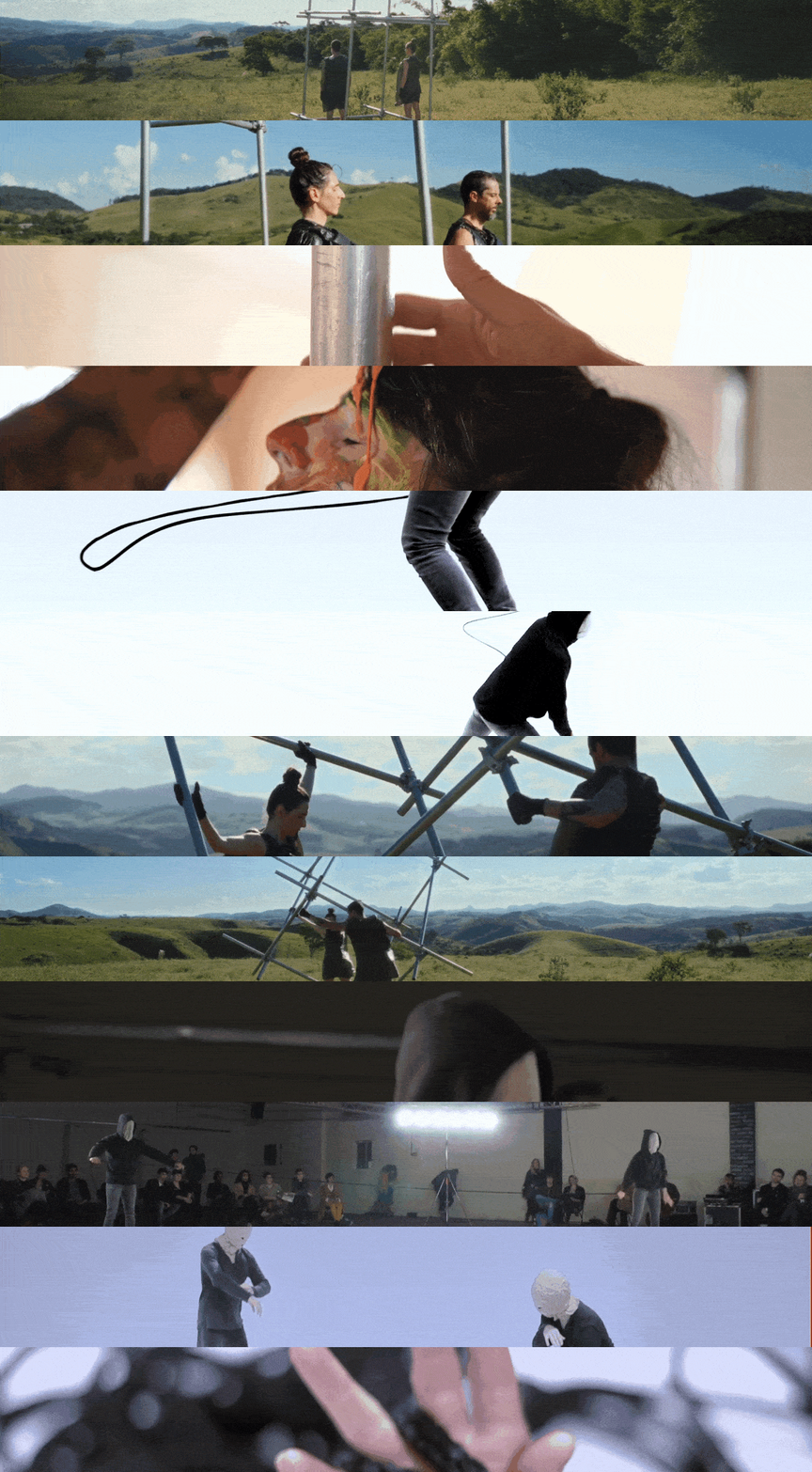
Interdisciplinary art, deeply rooted in the interaction between theory and practice, together with artists and researchers.
QUARTO is an interdisciplinary artist duo founded in 2003 by choreographers and artists Anna af Sillén de Mesquita and Leandro Zappala. Based between Sweden and Brazil, their practice moves across performance, choreography, visual art and video, developing long-term bodies of research around the relationship between bodies, objects, space and the conditions of encounter.
For more than two decades, QUARTO has developed works through sustained research rather than isolated projects. Their early and ongoing research includes the series WIP, BEAUTY and ROPE, with each work functioning independently while remaining connected to a larger artistic investigation. Their work has been described by Moderna Museet as a form of long-term interdisciplinary research, characterised by an open and unfinished relationship with the audience.
A significant part of this research has centred on the relationship between the body and a material object. The ROPE series developed around a 1,000-metre black silk rope, exploring physical endurance, tension, movement, transformation and the shifting relationship between body and object. Durational Rope was presented at Moderna Museet, Stockholm, in 2014, where QUARTO performed with the kilometre-long rope for five hours. The work was presented in collaboration with MDT. (Moderna Museet)
The ROPE research continued through works including Knot Body, THISENTANGLEMENT, ROPE#1, ROPE#2, Rope Installation and Communal Rope. QUARTO’s work was presented at MDT and Dansens Hus Stockholm, where the institutions documented the duo’s long-term interdisciplinary practice between Brazil and Sweden. THISENTANGLEMENT was co-produced by Moderna Museet and MDT. (Moderna Museet)
From 2019 onwards, QUARTO’s research increasingly developed around a metal cube, which became the starting point for Moving Landscapes. Over the following years, the cube travelled through different landscapes and contexts, functioning simultaneously as sculpture, architecture, stage, object and temporary place.
The work has been developed through collaborations, presentations and residencies involving Dansens Hus, MDT, Weld, Nationalmuseum, MAM Rio / Museum of Modern Art Rio de Janeiro, Panorama International Dance Festival, Serralves Museum, Art Safiental Biennale, Art Stations Foundation / Susch Museum, ZONA & Festival, Romania and Breaking Walls Festival Cairo, among others.
At Dansens Hus, the cube research developed into CUBE AS A HOPE, where the cube became a structure activated through bodies, sound and imagery. The work was co-produced by Dansens Hus and developed in residence at MDT and Muzeum Susch in Switzerland. (Dansens Hus)
At Nationalmuseum Stockholm, Moving Landscapes was presented outside the museum in a collaboration between QUARTO, Weld and Nationalmuseum. The museum describes the cube as a topos – a place for dwelling and positioning oneself in space – and as a vessel in flux rather than a symbol of permanence. The work was developed through collaborations and residencies with Dansens Hus, MDT, Breaking Walls Festival Cairo, ZONA & Festival Romania, Art Safiental Biennale, Art Stations Foundation / Susch Museum, Switzerland and Serralves Museum, Portugal. (Nationalmuseum)
The cube has also travelled through very different social and geographical contexts. In Brazil, Moving Landscapes was presented within the context of Panorama International Dance Festival and developed in collaboration with MAM Rio. The 2025 Panorama presentation brought the research into a larger collective performance context, with a group of performers from Centro de Artes da Maré, activating the cube together. (Panorama Festival)
In 2026, the research entered a new phase with Moving Landscapes Together, developed with Weld, Uppsala Art Museum and Region Uppsala, and involving other performers directly inside the structure. At Uppsala Art Museum, the work was presented as a physical and poetic investigation into how we might inhabit the world together through presence, negotiation and collective action. (Uppsala Konstmuseum)
At Weld / Sergels Torg in Stockholm, Moving Landscapes Together brought two invited dancers into the cube alongside QUARTO. Weld describes the cube as an open structure that is transformed and activated by those who enter it. The work draws on the Brazilian poet and writer Ferreira Gullar’s 1959 Neo-Concrete Manifesto, particularly the idea that an artwork becomes complete through the participation of the viewer. (Weld)
This development marks an important shift within the ongoing research. The cube is no longer only an object with which the two artists negotiate their own bodies. It becomes a structure for other bodies, other forms of agency and collective negotiation.
Across the work, QUARTO’s Brazilian and Swedish contexts are not simply biographical references but part of the artistic research. Moderna Museet has described their practice as shaped by living and working between the Brazilian and Swedish cultures, while the current Moving Landscapes research explicitly connects the cube to the improvised, communal and constantly changing spatial condition of the Brazilian favela.
Today, after more than two decades of continuous collaboration and seven years of research with the cube, QUARTO is interested in exploring what happens when an artistic structure becomes a shared space for negotiation – and when choreography can emerge not from a predetermined sequence of movements, but from relationships between bodies, objects, architecture, place and collective action.
In 2018, QUARTO received the Birgit Cullberg Fellowship, in recognition of their contribution to contemporary performance art.
Their work has been presented internationally in museums, galleries, festivals, and performance venues across Europe, South America, the Middle East, and the United States, spanning more than 25 countries and a wide range of institutions, including, among others:
The Netherlands: Frascati Theatre
Russia: Solyanka State Gallery
Sweden: Moderna Museet, MDT, Dansens Hus, NorrlandsOperan, Inkonst, Farsta Hallen, Weld, Uppsala Art Museum
Germany: Ludwig Forum for International Art, Uferstudios, tanzhaus nrw, IFA Gallery Berlin
Lebanon: Sursock Museum of Modern Art
Brazil: Panorama Festival – MAM Rio Museum of Modern Art, Cidade das Artes, Rio de Janeiro.
Denmark: Dansehallerne, Den Frie Centre of Contemporary Art
Portugal: Serralves Museum
Austria: donaufestival
United Kingdom: Fierce Festival, Fest en Fest Festival
Serbia: BITEF, Kondenz Festival
Uruguay: FIDCU – International Dance Festival of Uruguay, NIDO – Campo Abierto
Estonia: NOTAFE Festival
Chile: NAVE, OTROSUR
Poland: Stary Browar Nowy Taniec, Malta Festival
United States: La MaMa, New York
Egypt: Breaking Walls Festival
Switzerland: Muzeum Susch
Romania: ZONA & Festival, Timișoara – European Capital of Culture
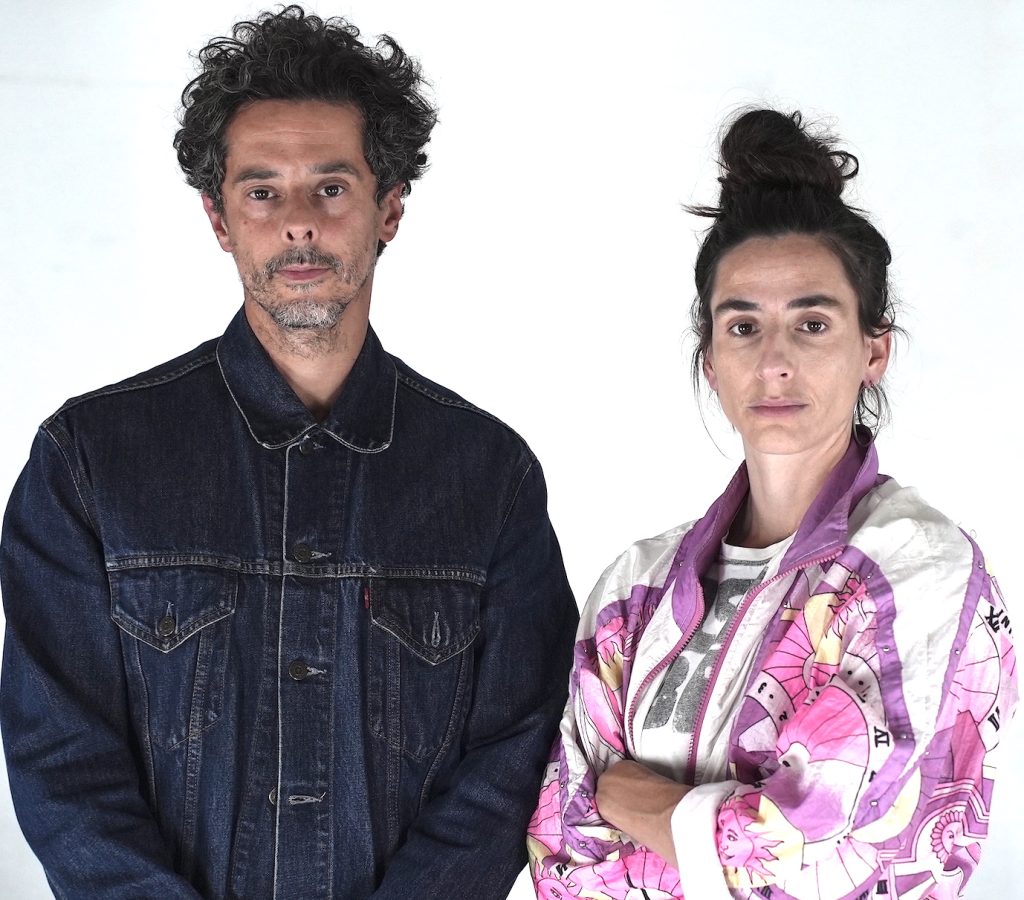
Leandro Zappala & Anna Mesquita (2023) QUARTO©